
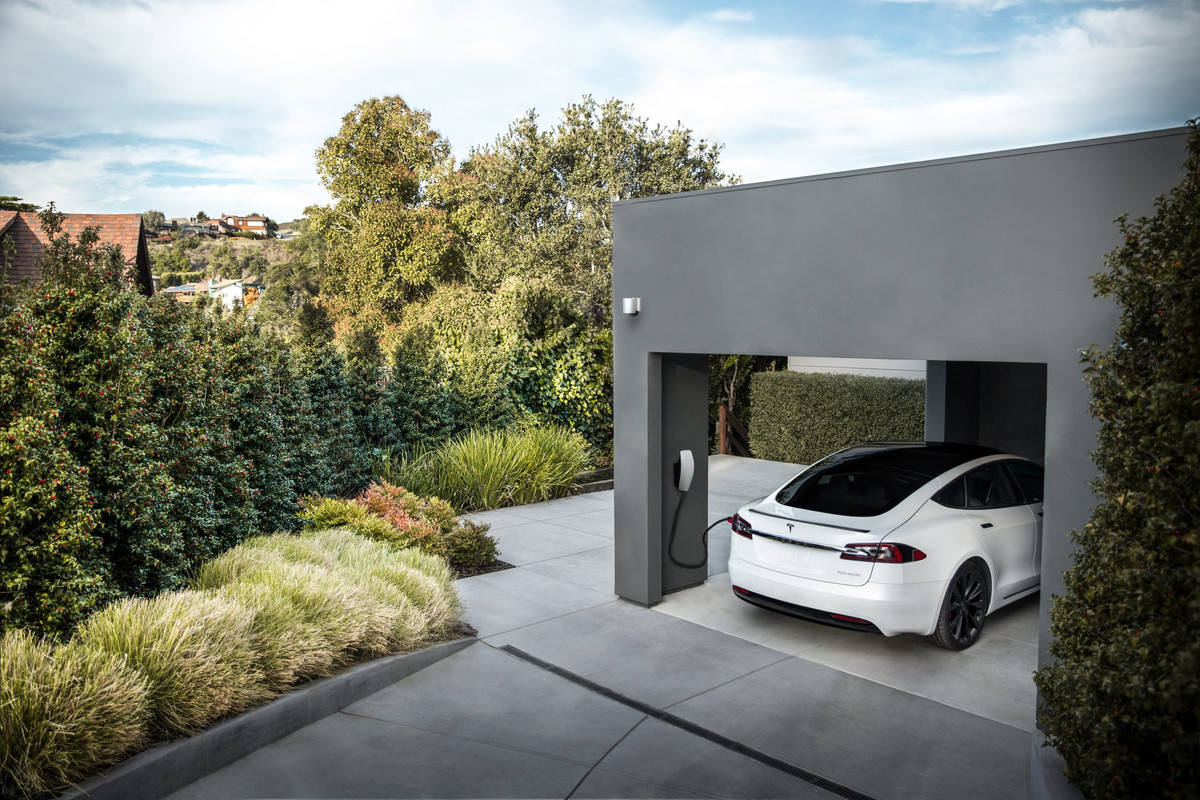
Quick Answer & Key Facts
After 200+ Bay Area installs, the deciding factor is almost always panel location and where you actually park. If your electrical panel is in the garage and you park in the garage, garage-mount is the cheapest, cleanest option. If your panel is on an exterior wall and you park in the driveway, an outdoor install is often cheaper because the wire run is shorter. Either way, both options are NEC-compliant and pass the same city inspection. The real differences are aesthetics, wire run cost, and weather protection.
- •Standard install: $2,550 all-in, including the permit; pre-wired homes from $850
- •Final price depends on your setup; firm quote after panel photos
- •Both pass the same permit + final inspection
- •Outdoor chargers must be NEMA 4 / NEMA 4X rated
- •Wire run distance is the #1 cost variable in either install
- •Tesla Wall Connector & most modern Level 2 chargers are rated for both
Garage Installation: The Gold Standard
For most Bay Area homeowners, garage installation is the default — and for good reasons. The charger stays protected from sun, rain, and the salty marine air on the coast (homes near the coast especially benefit). Cable management is cleaner because the cord coils on a wall hook instead of dangling outside. The warmer environment helps with battery preheat in winter. And if your panel is already in the garage (most Bay Area homes built post-1960), the wire run is short, the conduit is hidden inside the wall, and the install cost is at the low end of the range.
- •Protected from sun UV, rain, fog, and coastal salt air
- •Easier cable management — no exterior conduit across siding
- •Battery starts 10–15°F warmer in winter — faster initial charging
- •Charger isn't visible from the street — better for HOA-conscious homes
- •Clean aesthetic — no impact on home exterior or curb appeal
- •Typically the shortest wire run when panel is also in the garage
When Outdoor Installation Makes More Sense
Outdoor installs are right when life doesn't fit a garage install. Driveway-only parking (common in older San Francisco homes), garages packed with workshop, kayaks, or a second non-EV vehicle, or panels mounted on the exterior wall facing the driveway — these all favor outdoor. Modern Level 2 chargers including the Tesla Wall Connector, ChargePoint Home Flex, and Wallbox Pulsar Plus are all rated NEMA 4 or NEMA 4X for outdoor installation. We use stainless or aluminum mounting hardware and weatherproof conduit fittings (LB conduit bodies, rain-tight connectors) so the install lasts for the full 12-year unit life.
- •Driveway-only parking — charger right where you actually park
- •Multiple parking spots — easier reach for whichever car needs it
- •Garage is full of workshop, storage, or other vehicles
- •Panel on exterior wall = shortest wire run goes outdoor
- •All outdoor installs use NEMA 4 / 4X rated hardware
- •Stainless mounting and weatherproof conduit fittings included
The Real Cost Driver: Wire Run Distance
Most homeowners assume the difference between garage and outdoor is the equipment. It isn't — the equipment is essentially the same. The cost difference comes from wire run length, and from whether we're surface-mounting EMT or fishing through finished walls. A short run inside a garage is a very different scope from a 40-foot run from an interior panel through an exterior wall to a driveway charger. That's why we measure both options at every quote — sometimes the cheaper choice surprises people.
- •Surface-mount EMT conduit: the simplest routing
- •Fished through finished walls: more labor
- •Trenched underground (driveway crossing): adds to the scope
- •Subpanel near charger location: sometimes cheaper than a long run
- •Panel-to-charger distance is the #1 cost variable
- •We measure both routes free, before quoting
Power Management Considerations
The garage-vs-outdoor choice doesn't usually affect Power Management strategy. Most Bay Area homes with 200A service take a 60A breaker for a Wall Connector regardless of mount location — that's Static Power Management and it covers the majority of installs. Where the choice does matter slightly: outdoor installs with a long underground run sometimes benefit from a subpanel near the charger, which can change the load calc. If your panel is genuinely tight and you're considering Dynamic Power Management, the meter goes inside the main panel either way — DPM is location-agnostic. See our guide to Tesla Power Management options for the full breakdown of when Static, Dynamic, or Group is the right call.
- •Most installs use Static Power Management (free, breaker-sized)
- •Tight panels: Dynamic Power Management is one option
- •Long outdoor runs sometimes benefit from a local subpanel
- •DPM meter location is independent of charger location
- •Run a free NEC 220.87 load calc before deciding
Bay Area Considerations: Salt Air, Fog, and Sun
Coastal Bay Area weather is gentler than most of the country, but it has its quirks. Coastal homes, including Pacific Heights and Sunset District, deal with marine fog and salt air — outdoor installs there benefit from stainless hardware, dielectric grease on connectors, and a roof or eave overhang to shed direct rain. Inland homes (San Mateo, Burlingame, Sunnyvale) rarely see issues. South-facing exterior installs in the South Bay (Mountain View, Cupertino) can hit 130°F+ on a hot summer day — Tesla Wall Connectors throttle slightly above 122°F ambient, so we recommend a small sun shield or a north-facing wall when possible. Garage installs sidestep all of this.
- •Coastal homes: stainless hardware + dielectric grease on outdoor units
- •South-facing summer exposure: throttling above 122°F — use shade or shield
- •Inland Bay Area: outdoor installs rarely see weather issues
- •Eave overhang or weather hood: optional add-on
- •Garage install eliminates all weather exposure concerns
Free Tools from ChargeWizards